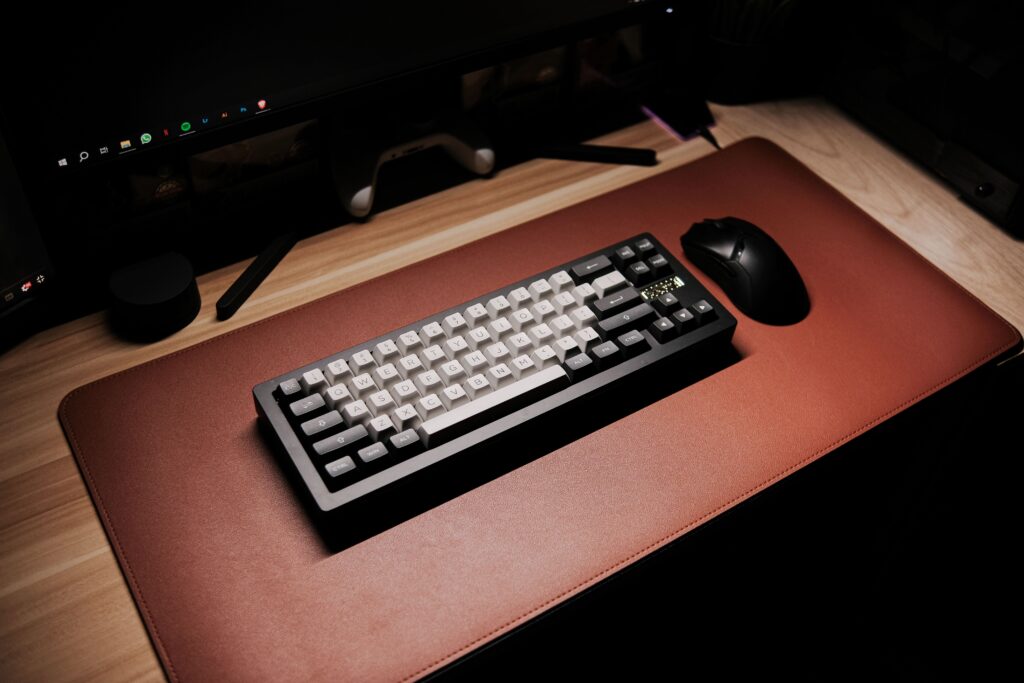
Felt or leather? Discover the ergonomic benefits of using a premium desk pad and find the perfect material to protect your wrists and workspace.
Often dismissed as a purely cosmetic upgrade for aesthetic social media setups, a high-quality desk pad provides vital contact ergonomics. It serves as a protective buffer between your body and the unforgiving, hard surface of your desk.
If you are trying to decide how to surface your workstation, this comprehensive guide breaks down the ergonomics of desk mats and pits the two reigning materials felt and leather against each other.
The Ergonomics of “Contact Stress”
In workplace wellness, resting your forearms and wrists on the sharp, cold edge of a wooden, metal, or glass desk for hours at a time causes what is known as contact stress.
When you type or use a mouse, the weight of your arms presses your soft tissues against a hard surface. Over a standard eight-hour shift, this localized pressure:
- Restricts blood circulation to your hands and fingers.
- Compresses the median and ulnar nerves, leading to tingling or numbness.
- Causes micro-trauma to the tendons in your wrists.
A thick desk mat acts as a shock absorber. By distributing the weight of your arms across a wider, padded surface area, it softens those high-pressure contact points and keeps your joints insulated from cold desk surfaces that can stiffen muscles.
Felt Desk Pads: The Cozy, High-Texture Choice
Usually crafted from pressed wool or synthetic fibers, felt desk mats have taken modern workspaces by storm due to their warm, structured appearance.
The Pros:
- Exceptional Wrist Warmth: Felt is a brilliant insulator. If your desk is made of cold glass or solid hardwood, felt instantly creates a warm, comfortable microclimate for your arms.
- Premium Texture and Tactility: It provides a soft, highly tactile resting surface that reduces friction when sliding your hands across the desk.
- Sound Dampening: Felt absorbs high-frequency keyboard clacks, making your typing environment sound significantly deeper, quieter, and more satisfying.
The Cons:
- The Spill Nightmare: Felt is highly porous. If you spill coffee, tea, or water on it, the liquid sinks in instantly, making it prone to deep staining and difficult to clean.
- Potential Skin Irritation: Low-grade, cheap synthetic felt pads can feel scratchy or abrasive against bare forearms. Stick to high-quality merino wool or premium soft-blend blends.
Leather Desk Pads: The Sleek, High-Durability Professional
Whether made from genuine top-grain cowhide or high-quality eco-friendly PU (polyurethane) leather, smooth-surface desk pads offer a timeless, executive workflow.
The Pros:
- Effortless Maintenance: Leather is completely non-porous. If you spill a drink, you simply wipe it down with a damp cloth. It is entirely stain-resistant and waterproof.
- Flawless Mouse Tracking: Because the surface is perfectly flat and uniform, optical mouse sensors track with extreme precision, making it excellent for high-precision workflows or casual gaming.
- Incredible Longevity: A solid leather or heavy-duty PU pad will not fray, pill, or lose its structural shape over years of heavy use.
The Cons:
- Temperature Trapping: In hot summer months, bare skin can stick to leather surfaces, causing sweat build-up and localized discomfort.
- Less Cushioning: Leather pads are typically thinner and denser than wool felt, offering a bit less raw structural padding for your wrists.
Critical Features to Check Before Buying
No matter which material camp you choose, ensure your desk pad checks these engineering boxes:
- Anti-Slip Backing: A desk pad that slides around every time you move your mouse is incredibly frustrating. Look for felt pads with rubberized silicone dots underneath, or leather pads with a textured suede backing.
- Stitched Edges: Ensure the perimeter features tight, reinforced stitching. Unstitched edges on both felt and PU leather will begin to separate, fray, and peel apart within a few months of forearm friction.
- Optimal Thickness: Look for a thickness between 3mm and 5mm. Anything thinner won’t offer enough contact stress relief; anything thicker can create an uneven surface that makes your keyboard tilt awkwardly.
Final Verdict
Choosing between felt and leather comes down to prioritizing your daily environment. If your home office is prone to coffee spills and you require ultra-precise mouse tracking, a sleek leather pad is the most reliable tool. If you want maximum wrist cushioning, sound dampening, and a warm, cozy texture to combat a cold workspace, a premium felt mat is an unbeatable ergonomic upgrade.